Provincial Licensing Variations and Their Influence on Bonus Payout Timelines for In-Game Hockey and Football Markets Across Canadian Platforms
Written by Sam Neumann · Sep 14, 2026
Provincial Licensing Variations and Their Influence on Bonus Payout Timelines for In-Game Hockey and Football Markets Across Canadian Platforms
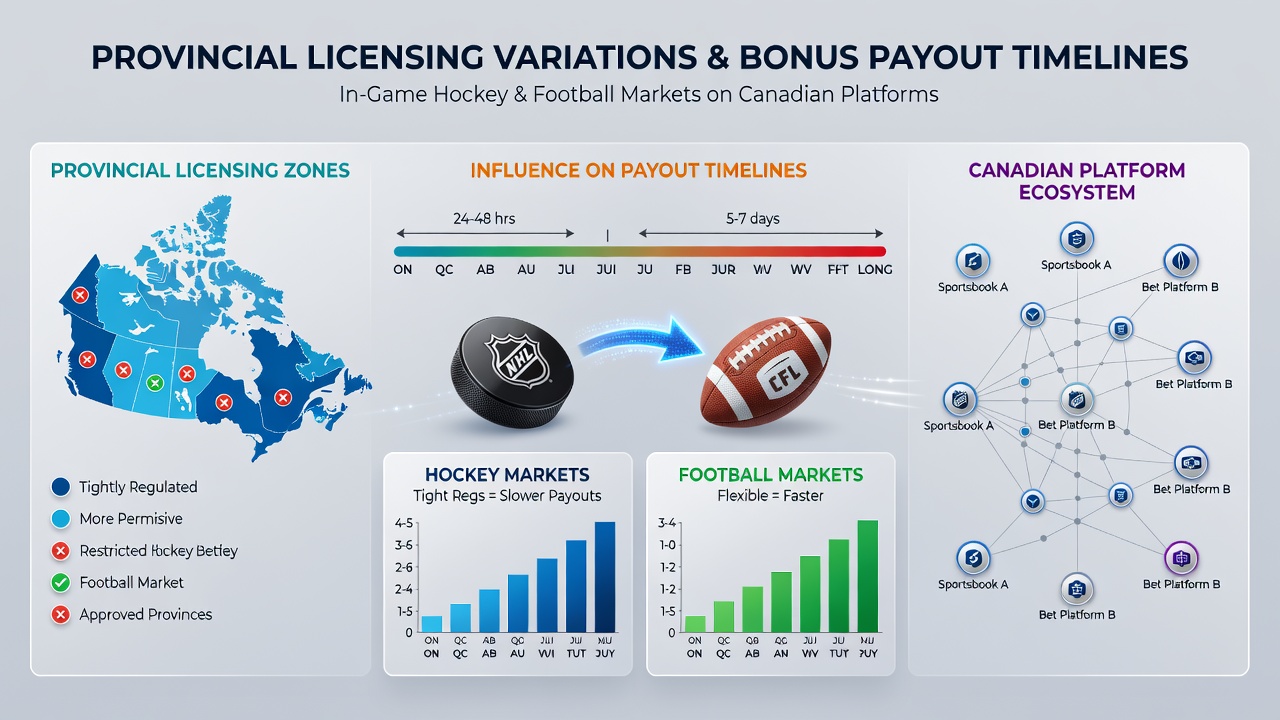
Provincial licensing frameworks across Canada create distinct operational rules that directly shape how platforms handle bonus payouts for live hockey and football wagers, and these differences stem from each jurisdiction's regulatory priorities on player verification, fund segregation, and dispute resolution processes. Operators must align their bonus release schedules with the specific statutes in Ontario, British Columbia, Quebec, and Alberta, which means timelines for crediting promotional funds after in-game events can range from hours to several business days depending on the license under which the transaction occurs.
Ontario's iGaming Model and Accelerated Verification Protocols
Ontario's regulated market, overseen by the Alcohol and Gaming Commission of Ontario, requires platforms to maintain separate player accounts with real-time identity checks that integrate directly into bonus disbursement systems, allowing many operators to process in-game hockey goal-scorer bonuses or football yardage prop payouts within the same session when verification clears immediately. Data from the commission shows that since the market opened, average bonus release times for live NHL and CFL markets have stabilized around 4 to 12 hours for verified accounts, while unverified ones trigger manual reviews that extend to 48 hours. This structure encourages platforms to front-load verification prompts during account creation, which in turn reduces friction for users placing live bets on evening games.
British Columbia and Alberta Approaches to Fund Segregation
British Columbia's framework through the British Columbia Lottery Corporation emphasizes strict segregation of bonus funds from operational accounts, which adds an extra reconciliation step before any payout can finalize for in-game markets, and Alberta's emerging rules mirror parts of this approach while incorporating additional tax reporting layers that further extend processing windows. Observers note that these requirements often result in bonus timelines stretching to 24-72 hours for football live betting activity, particularly when platforms must cross-reference wagers against provincial tax ledgers before releasing promotional credits tied to multi-leg parlays on NHL games. The added compliance layer means operators serving both provinces sometimes apply uniform longer timelines to avoid regulatory mismatches, even when the underlying technology could support faster releases.
Quebec's Centralized Oversight and Its Effect on Live Market Bonuses
Quebec operates under a centralized model that channels most online activity through Loto-Québec systems, which imposes standardized audit trails on every bonus transaction for in-game hockey and football events, and this creates predictable but sometimes slower payout cadences compared with more fragmented provincial setups. Research indicates that bonus credits linked to live CFL or NHL action typically clear within one to two business days once the audit completes, with the process designed to flag any discrepancies in wager timing or player location data before funds become available for withdrawal or further betting. Platforms licensed in this jurisdiction often build buffer periods into their user interfaces so bettors see estimated release dates that account for these mandatory checks.
Cross-Provincial Platform Adaptations for Hockey and Football Markets
Many operators run multi-jurisdictional platforms and therefore deploy conditional bonus engines that detect the user's provincial license at login, then apply the corresponding payout schedule for live markets, which explains why the same NHL overtime goal bonus might appear in an account within hours in Ontario yet require overnight processing for a user in Alberta. Figures from industry reports reveal that September 2026 saw several platforms update these engines to handle increased live football volume during the CFL season, with adjustments that shortened average timelines by up to 30 percent in provinces allowing faster reconciliation while maintaining compliance elsewhere. Those who track these systems note that the technical integration often relies on API connections to each province's regulatory database, turning what looks like a simple bonus credit into a multi-step verification sequence.
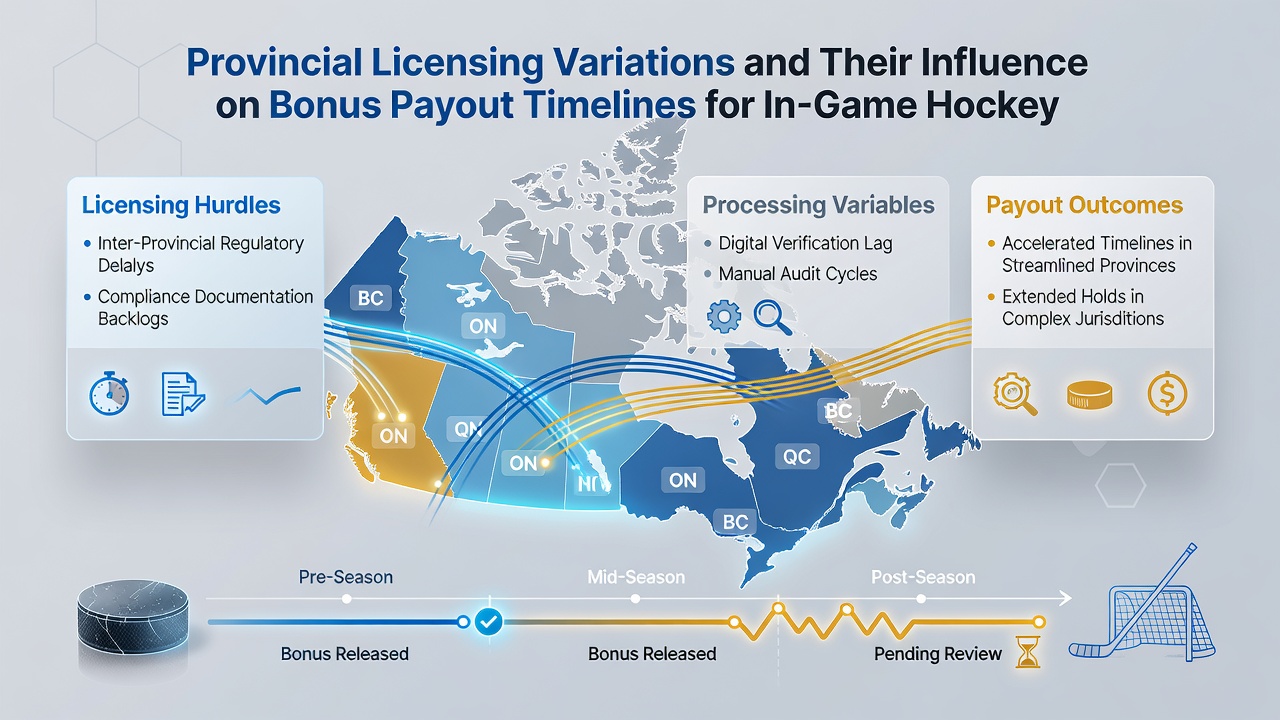
Take one platform that expanded its in-game NHL offerings in 2026 and discovered that aligning bonus releases across Ontario and Quebec required separate compliance teams to monitor each license's audit frequency, resulting in a unified dashboard that displays province-specific estimated payout windows to users. The same platform reported that football live betting bonuses, which often involve higher stake volumes during marquee games, triggered additional review layers in provinces with stricter fund segregation rules, extending timelines by an average of one business day during peak periods.
Regulatory Data and Industry Reporting Trends
According to the Alcohol and Gaming Commission of Ontario, transaction volume for live sports bonuses grew steadily through 2026, with verification automation cited as the primary driver behind reduced processing times in that province. A separate analysis from the Canadian Gaming Association highlights how platforms balance these provincial demands by maintaining regional server instances that apply localized rulesets, ensuring bonus timelines remain compliant without requiring users to navigate multiple accounts. What's notable is that these adaptations have allowed operators to offer consistent promotional structures for hockey and football markets while still respecting each license's unique constraints on fund movement and audit requirements.
Conclusion
Provincial licensing differences continue to dictate the precise mechanics of bonus payout timelines for in-game hockey and football activity on Canadian platforms, producing a landscape where operators must maintain flexible systems that respond to each jurisdiction's verification, segregation, and reporting mandates. Data collected through 2026 demonstrates that provinces with streamlined digital verification achieve faster average releases, whereas those emphasizing layered audits extend timelines accordingly, and this pattern holds across both NHL and CFL live markets. Platforms that successfully integrate these variations deliver bonus credits that reflect the regulatory environment of each user without compromising overall service consistency.